Living in Stadium District Tacoma: A Complete Neighborhood Guide
If you're thinking about moving to Tacoma and want a neighborhood that feels distinctly different from a typical residential subdivision, Stadium District deserves a closer look. Located immediately north of Downtown Tacoma, Stadium combines historic homes, condos and apartments, neighborhood businesses, restaurants, coffee shops, Wright Park, distinctive architecture, and convenient access to several other parts of central and North Tacoma. It is also a neighborhood where the details matter because the age of the housing, hills, parking, density, views, building type, and even the particular block you're considering can influence what living here actually feels like.
As Shu, a Realtor in Tacoma and throughout Western Washington, I encourage buyers to experience a neighborhood beyond the listing photos before deciding whether it fits. Stadium District is especially well suited to that kind of exploration because so much of its character becomes obvious when you experience it at street level. Walk several blocks, grab coffee, visit Wright Park, explore the business district, look at the different housing types, and pay attention to the routes you would actually use. You will quickly see why living in Stadium District Tacoma provides a very different experience from living in a newer suburban community or even another Tacoma neighborhood.
What Is It Like to Live in Stadium District Tacoma?
Living in Stadium District Tacoma gives you an urban neighborhood experience surrounded by historic architecture, established residential streets, local businesses, parks, condos, apartments, and older single-family homes. The neighborhood sits immediately north of Downtown Tacoma and provides convenient access to Wright Park, the Stadium business district, nearby North End neighborhoods, and other central Tacoma destinations. Housing varies considerably, so choosing the right property often means deciding whether you prefer historic character, a condominium lifestyle, more residential space, a view, dedicated parking, or easier access to the neighborhood's commercial core.
That variety is one of the defining characteristics of Stadium District Tacoma real estate. You can walk past a substantial historic residence and, a short distance later, encounter an older apartment building, condominium property, neighborhood restaurant, coffee shop, grocery store, or professional office. That mixture gives Stadium a different rhythm from communities dominated almost entirely by detached houses, and it means two buyers looking in the same neighborhood may be searching for completely different types of homes. If you're considering moving to Stadium District, understanding that combination of residential and urban characteristics is one of the best places to begin.
Where Is Stadium District in Tacoma?
Stadium District is located immediately north of Downtown Tacoma and along the edge of Tacoma's North End, with much of the neighborhood activity centered around North Tacoma Avenue, North 1st Street, Division Avenue, and surrounding streets. Downtown is immediately to the south, Wright Park sits alongside the district, and Old Town and the waterfront are nearby. Other North Tacoma destinations, including North Slope, Proctor, and the 6th Avenue area, are also relatively accessible. This central location helps explain why Stadium can appeal to buyers who want neighborhood character without feeling disconnected from the rest of Tacoma.
The neighborhood also sits on elevated terrain above Commencement Bay, which contributes to both its visual character and its topography. Depending on the street and property, you may encounter territorial, city, water, or mountain views, while other locations feel more enclosed by mature trees and historic buildings. The City of Tacoma includes Stadium within its broader Downtown Regional Growth Center, reflecting the mixture of housing, transportation, commercial activity, and urban development in this part of the city. For a buyer comparing Stadium with Fircrest, University Place, Lakewood, Gig Harbor, or communities farther from Tacoma's urban core, that location creates a noticeably different day-to-day experience.
Stadium District Is One of Tacoma's Historic Neighborhoods
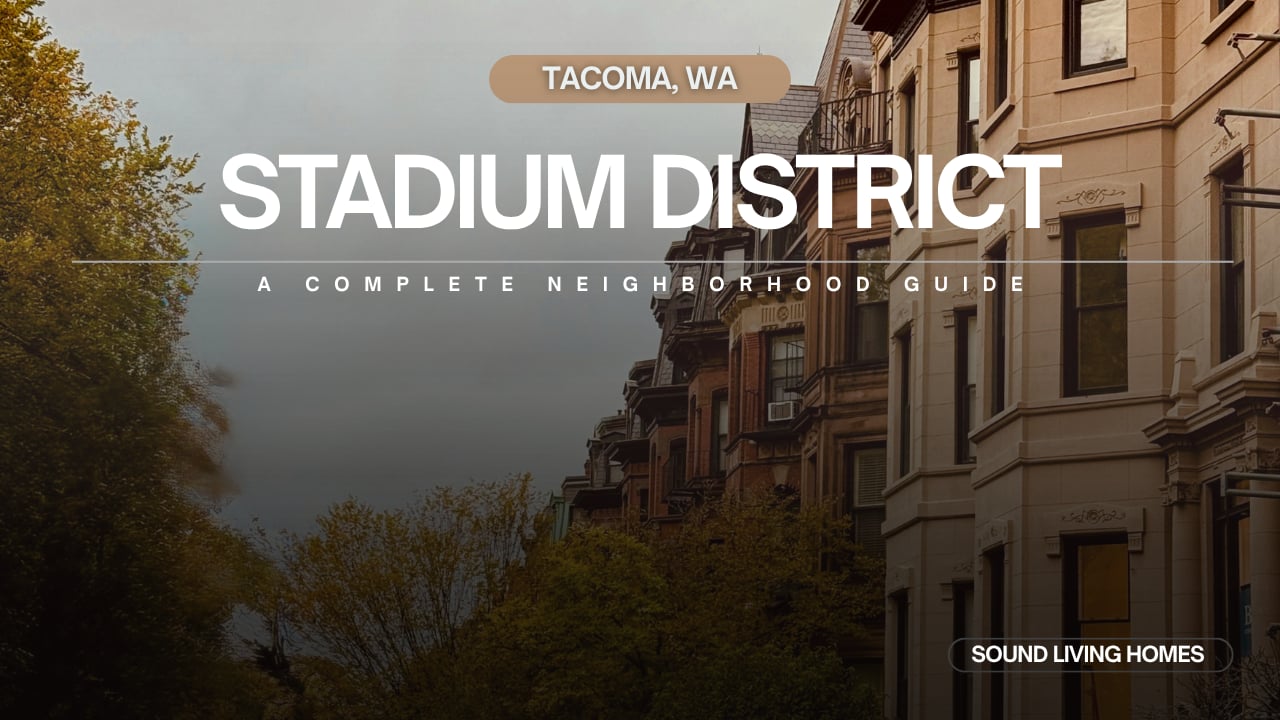
You cannot really understand Stadium District without understanding its history because much of what makes the neighborhood visually distinctive comes directly from its early development. The Stadium-Seminary Historic District was listed on the National Register of Historic Places in 1977, and the City of Tacoma describes the area as one of Tacoma's earliest residential neighborhoods. Significant examples of late 19th and early 20th-century residential architecture remain throughout the district, particularly along its tree-lined residential streets. Walking through this part of Tacoma gives you a much stronger sense of that history than simply looking at individual homes online.
For a homebuyer, historic character can be visually compelling, but it should also lead to practical questions about ownership. Older homes may have undergone decades of renovations, additions, repairs, and system replacements, so two houses constructed around the same period can have completely different maintenance histories today. One property may have updated electrical, plumbing, roofing, windows, heating, and drainage, while another may retain significantly older components. That is why I recommend evaluating a historic Stadium home based on what the property is today rather than making assumptions based solely on its architectural style or year built.
Stadium High School Is an Architectural Landmark
Stadium High School is one of Tacoma's most recognizable buildings and the landmark that gives the neighborhood much of its identity. The building was originally conceived as a luxury hotel during Tacoma's early growth period, but financial problems halted the project before it could fulfill that purpose. After additional setbacks, including a major fire, the Tacoma School District eventually acquired the property and converted it into a high school. The school opened in 1906, and Stadium Bowl followed several years later in 1910, creating the dramatic complex that still overlooks Commencement Bay today.
Even if you have no connection with the school itself, the building contributes heavily to the architectural character of the surrounding neighborhood. Its scale, setting, and history help explain why Stadium District feels different from newer areas of Pierce County where most development occurred decades later. This is an important distinction when you're considering living in Stadium District Tacoma because the neighborhood's identity is tied closely to its historic buildings, street patterns, mature landscaping, and topography. You are not simply choosing a house or condo here, but also choosing an established urban environment that has evolved over more than a century.
What Types of Homes Are in Stadium District Tacoma?
One of the most important things to understand about Stadium District Tacoma real estate is that there is no single Stadium housing type. The broader area includes historic detached homes, smaller residences, condominiums, apartments, and multifamily properties, sometimes within a relatively short distance of one another. Even among detached homes, architectural style, lot configuration, renovation history, parking, views, stairs, and interior layouts can vary substantially. That variety can make searching here interesting, but it also makes direct property comparisons more complicated than simply comparing bedroom count and square footage.
For example, one buyer may be choosing between a historic detached house and a condominium rather than between two similar single-family homes. Another may be comparing an extensively renovated older property with a less updated home that offers a more appealing lot or view. Parking can become a significant differentiator, particularly when one property has a functional garage or driveway and another relies primarily on street parking. When you're buying a home in Stadium District Tacoma, it helps to identify the ownership characteristics that matter most to you before becoming overly focused on finishes or individual listing photos.
Buying an Older Stadium Home Requires Different Due Diligence
Original millwork, hardwood floors, built-ins, distinctive windows, tall ceilings, and unusual floor plans can give an older Stadium home personality that is difficult to recreate in newer construction. Those architectural details are part of the attraction, but they should not distract you from understanding the home's underlying systems and condition. Depending on the property, electrical service, plumbing, sewer, foundation, roof, drainage, heating, windows, exterior materials, and previous renovations may all deserve careful investigation. A beautiful living room does not tell you what is happening beneath the house or behind the walls.
Previous improvements deserve attention as well because many older Tacoma properties have been modified multiple times throughout their history. Some changes may have been completed recently, while others could date back decades, and available permits or documentation may help you understand what work was performed. Historic designation can also be more nuanced than buyers sometimes assume. The Stadium-Seminary district is listed on the National Register, but it is not the same as Tacoma's locally regulated historic districts, so you should verify property-specific requirements before assuming what you can or cannot change.
Walkability and Everyday Convenience Are Major Parts of Stadium Living
Stadium is one of those Tacoma neighborhoods where walking around can tell you much more than driving through once. The neighborhood business district puts restaurants, coffee, grocery shopping, professional services, and other businesses within a relatively concentrated area, while Wright Park and downtown add additional destinations nearby. The City of Tacoma recognizes Stadium as one of its established neighborhood business districts, and longstanding businesses such as Stadium Thriftway contribute to the district's ability to function as more than simply a residential neighborhood. Depending on where you live, several everyday errands may be possible without driving across town.
That does not mean every Stadium property provides the same walking experience, which is why I recommend testing the actual routes that matter to you. Distance matters, but hills, intersections, weather, and what you're carrying can matter just as much. A coffee shop that looks close on a map may involve a significant grade change, and carrying groceries uphill provides a different experience from taking a casual walk on a sunny afternoon. If walkability is one of the reasons you're considering Stadium District, park near the property and walk to the destinations you expect to use before deciding whether the location works for you.
Wright Park Gives Stadium District a Major Green Space
Wright Park is one of the defining outdoor spaces associated with Stadium District and central Tacoma. Rather than functioning as a small neighborhood pocket park, it occupies a substantial area with mature trees, open lawn, pathways, recreation opportunities, and the W.W. Seymour Botanical Conservatory. Its location creates a noticeable green transition between Stadium, downtown, and nearby neighborhoods, giving residents access to a significant public space within the surrounding urban environment. For someone living nearby, the park can become part of an everyday walking or exercise route rather than only an occasional destination.
Wright Park also illustrates one of the qualities that makes Stadium interesting as a neighborhood. Within a relatively compact area, you can move from a commercial street to historic residential blocks and then into a large established park without traveling across the city. That mixture gives the neighborhood multiple layers and prevents it from feeling entirely residential or entirely urban. When you're evaluating a Stadium property, proximity to Wright Park may therefore be worth considering alongside the more obvious questions about the home itself.
Parking, Hills, and Topography Deserve Serious Attention
If you're coming from an area where nearly every home has a large driveway and attached garage, do not treat parking as an afterthought when searching in Stadium District. The neighborhood developed under very different assumptions about automobiles, and parking arrangements can vary dramatically between properties. Some detached homes have garages or driveways, some condos provide assigned or covered parking, and other properties rely more heavily on street parking. If you own multiple vehicles, regularly have visitors, or simply place a high value on dedicated parking, investigate the arrangement before you become emotionally attached to a property.
Topography is another practical consideration because Tacoma is not flat, and Stadium makes that especially obvious. The neighborhood sits on elevated terrain above Commencement Bay, creating slopes, bluff conditions, stairs, retaining walls, and some impressive views. Those hills can affect walking routes, driveways, drainage, landscaping, and how a lot functions, so they should be evaluated as part of the property rather than treated purely as scenery. A location that appears extremely close to a destination on a map can feel very different once you actually walk the route and experience the elevation change.
Stadium District Gives You Easy Access to More of Tacoma
One of Stadium's strengths is that you do not have to rely exclusively on businesses and amenities located inside the neighborhood itself. Downtown Tacoma is immediately south, Old Town and the waterfront are nearby, and other North Tacoma destinations are accessible without crossing the entire city. Depending on your location and transportation preferences, museums, restaurants, entertainment, waterfront destinations, parks, employment centers, and other neighborhood business districts can all become part of your broader routine. Stadium therefore works best when you think of it as part of a connected section of Tacoma rather than an isolated neighborhood.
This is also why buyers relocating from outside the area sometimes need time to understand Tacoma's geography. Neighborhood boundaries matter, but your daily experience often extends well beyond them. A Stadium resident may regularly spend time downtown, along the waterfront, in Proctor, on 6th Avenue, or elsewhere in North Tacoma without thinking of those trips as significant excursions. When you're choosing a home, understanding those connections can be more useful than focusing exclusively on what sits within an exact neighborhood boundary.
Who Should Consider Living in Stadium District Tacoma?
I would never tell you that Stadium is the "best" Tacoma neighborhood because there is no neighborhood that is best for everyone. Instead, look at the characteristics and decide whether they match what you want from your next home. Stadium may deserve serious consideration if you value historic architecture, different housing types, proximity to downtown, neighborhood businesses, access to a major city park, and the possibility of completing some everyday trips without driving across town. Buyers who enjoy older buildings and established urban neighborhoods may also find the area particularly interesting.
At the same time, you should think carefully about the realities that come with those characteristics. Older-property maintenance, condo association considerations, parking, hills, density, smaller or unusual lot configurations, and the potential complexity of renovating an older home may all influence your decision. Those factors are not automatically advantages or disadvantages because different buyers will evaluate them differently. The goal is to understand the tradeoffs clearly enough that you can decide whether Stadium's version of Tacoma living fits your priorities.
Stadium District vs. Other Tacoma and South Sound Communities
If Stadium interests you, compare it with a few alternatives rather than evaluating it in isolation. North Slope offers another opportunity to explore historic Tacoma housing, while Proctor combines established residential streets with its own neighborhood business district. Old Town places you closer to the waterfront, and Downtown Tacoma provides a more urban residential environment. Even within North Tacoma, relatively short distances can produce meaningful differences in housing type, topography, parking, commercial activity, and the overall feel of the surrounding streets.
Your comparison may also extend outside Tacoma entirely. Fircrest, University Place, Lakewood, Gig Harbor, Puyallup, Spanaway, Steilacoom, Renton, Kent, Silverdale, and other communities throughout Pierce, King, Kitsap, and Thurston Counties each offer different combinations of housing, location, commuting, maintenance, recreation, and everyday convenience. My job as your Realtor is not to decide which community you should choose. It is to help you understand those practical differences so you can make the decision that fits your priorities, and if that comparison starts getting complicated, we can always work through it over a cup of coffee.
Frequently Asked Questions About Living in Stadium District Tacoma
Is Stadium District close to Downtown Tacoma?
Yes. Stadium District is immediately north of Downtown Tacoma, so the two areas are closely connected even though Stadium maintains its own residential and commercial identity. The City of Tacoma includes Stadium within the broader Downtown Regional Growth Center, and the neighborhood's location also provides access to other parts of central and North Tacoma. If downtown proximity matters to you, evaluate the specific property and the routes you expect to use because the neighborhood's hills can influence how close two places feel in practice.
Are there historic homes in Stadium District Tacoma?
Yes. The Stadium-Seminary Historic District contains significant residential architecture dating primarily from the late 19th and early 20th centuries, and historic homes are a major part of the neighborhood's visual identity. Buyers considering older properties should look beyond architectural character and evaluate renovations, systems, maintenance, sewer, drainage, and property-specific considerations. Two homes of similar age may have completely different ownership histories and current conditions, so due diligence should focus on the individual property.
Are there condos in Stadium District Tacoma?
Yes. Condominiums are an important part of the Stadium housing mix and can offer a very different ownership experience from a detached historic home. When considering a condo, evaluate the unit as well as the homeowners association, dues, reserves, insurance responsibilities, parking, storage, rules, maintenance history, planned projects, and possible assessments. Understanding the building can be every bit as important as deciding whether you like the kitchen or view inside the unit.
Can you walk to restaurants and coffee shops in Stadium District?
Stadium has a concentrated neighborhood business district with restaurants, coffee, grocery shopping, professional services, and other businesses, making walking a meaningful part of the neighborhood experience for many residents. However, your actual experience depends on the property's location, the destinations you want to reach, and your comfort with the area's hills and weather. If walkability is important to your decision, test your likely routes in person rather than relying exclusively on a map or numerical walk score.
What should I know about parking in Stadium District?
Parking varies considerably depending on the property and block. Some detached homes have garages or driveways, some condominiums include assigned or covered spaces, and other properties rely more heavily on street parking. Buyers with multiple vehicles or specific parking needs should investigate the situation carefully, including whether an older garage comfortably accommodates their vehicle and what parking looks like at different times of day.
What should I know before buying an older Stadium District home?
Focus on the current condition and systems rather than simply the home's age. Depending on the property, electrical, plumbing, sewer, roof, foundation, drainage, windows, heating, exterior materials, previous renovations, and permitting where applicable may deserve investigation. Older homes can offer architectural details and craftsmanship that are difficult to reproduce, but understanding what has and has not been updated is an important part of making an informed purchase.
What parks are near Stadium District Tacoma?
Wright Park is the major green space associated with Stadium District and is also home to the W.W. Seymour Botanical Conservatory. The neighborhood's central location also puts you relatively close to additional parks, waterfront areas, and recreation elsewhere in Tacoma. If outdoor access is important to you, Stadium's combination of an established city park and connections to other parts of central and North Tacoma is worth exploring in person.
Is Stadium District only historic houses?
No. Stadium includes detached houses, condominiums, apartments, and multifamily properties in addition to its well-known historic residences. That variety means buyers can have very different ownership experiences while living within the same broader neighborhood. It is one of the reasons I recommend evaluating Stadium at the individual property and block level rather than assuming the entire neighborhood functions the same way.
Is Stadium District Tacoma Right for You?
Stadium District is one of those neighborhoods that makes considerably more sense after you spend time there. Walk the residential streets, look at the architecture, stop for coffee, visit Wright Park, drive the hills, check the parking around a property you're considering, and explore the commercial district. Then head toward downtown, Old Town, the waterfront, or another North Tacoma neighborhood so you understand how Stadium connects with the rest of the city. That experience will tell you far more than simply scrolling through available homes.
If historic architecture, an established urban neighborhood, different housing options, nearby businesses, parks, and proximity to downtown are important to you, Stadium deserves a closer look. If you prefer newer construction, more predictable lot configurations, abundant private parking, or a less urban environment, comparing Stadium with other Tacoma and South Sound communities may help clarify your priorities. A neighborhood search should help you understand not simply where you can afford to buy, but what type of ownership experience you actually want.
Explore Homes for Sale in Stadium District Tacoma
Once you've explored the neighborhood, the next step is seeing how individual properties compare. One Stadium home may offer historic character and a larger residential footprint, while another may provide a lower-maintenance condo experience, dedicated parking, a view, or closer access to the commercial district. Looking at current listings can help you understand how dramatically housing can vary within a relatively compact neighborhood and which characteristics matter most to you.
[DISCOVER YOUR DREAM HOME IN STADIUM DISTRICT TACOMA]
If you find a property that catches your attention, I can help you evaluate more than the list price and photographs. We can look at the property itself, location, comparable sales, parking, maintenance considerations, condo documents where applicable, and how it compares with other options in Stadium and nearby neighborhoods.
Already Own a Home and Thinking About Your Next Move?
If buying in Stadium District involves selling your current property first, it helps to understand both sides of the move before you become serious about a purchase. Knowing what your current home may be worth, what you may net after selling costs, and how the sale could affect your purchasing timeline can give you much better information before you start making commitments. This is especially important if you need the equity from your existing home to complete the next purchase.
My Ultimate Guide to Selling a Home in Western Washington walks through preparing your property, understanding value, pricing, marketing, offers, inspections, appraisal, selling costs, estimated net proceeds, and coordinating a sale with your next purchase. If selling is likely to be part of your move, you can start here: The Ultimate Guide to Selling a Home in Western Washington. Even if you're several months away, understanding the selling side early can help you build a more realistic plan for what comes next.
Have Questions About Stadium District? Let's Grab Coffee
You do not need to be ready to write an offer before reaching out. If you're trying to decide between Stadium District, another Tacoma neighborhood, Fircrest, University Place, Lakewood, Gig Harbor, Puyallup, Spanaway, Steilacoom, Renton, Kent, Silverdale, or somewhere else in Western Washington, I'm happy to help you work through the differences. We can talk about housing types, condos, older homes, location, commute considerations, parking, maintenance, views, current inventory, or whatever else is important to your move.
I'm Shu, a Managing Broker and Realtor® serving Tacoma and communities throughout Pierce, King, Kitsap, and Thurston Counties. Sometimes a neighborhood decision becomes much easier after talking through what you actually want from the home and location rather than opening another twenty browser tabs. If you have questions about Stadium District or you're simply trying to figure out where your next move should take you, let's grab a cup of coffee and talk it through.
If you would rather start by looking at available properties, you can begin here:

Stephen (Shu) Hsu
Managing Broker, Realtor®
253-948-8900
[email protected]
SoundLivingHomes.com