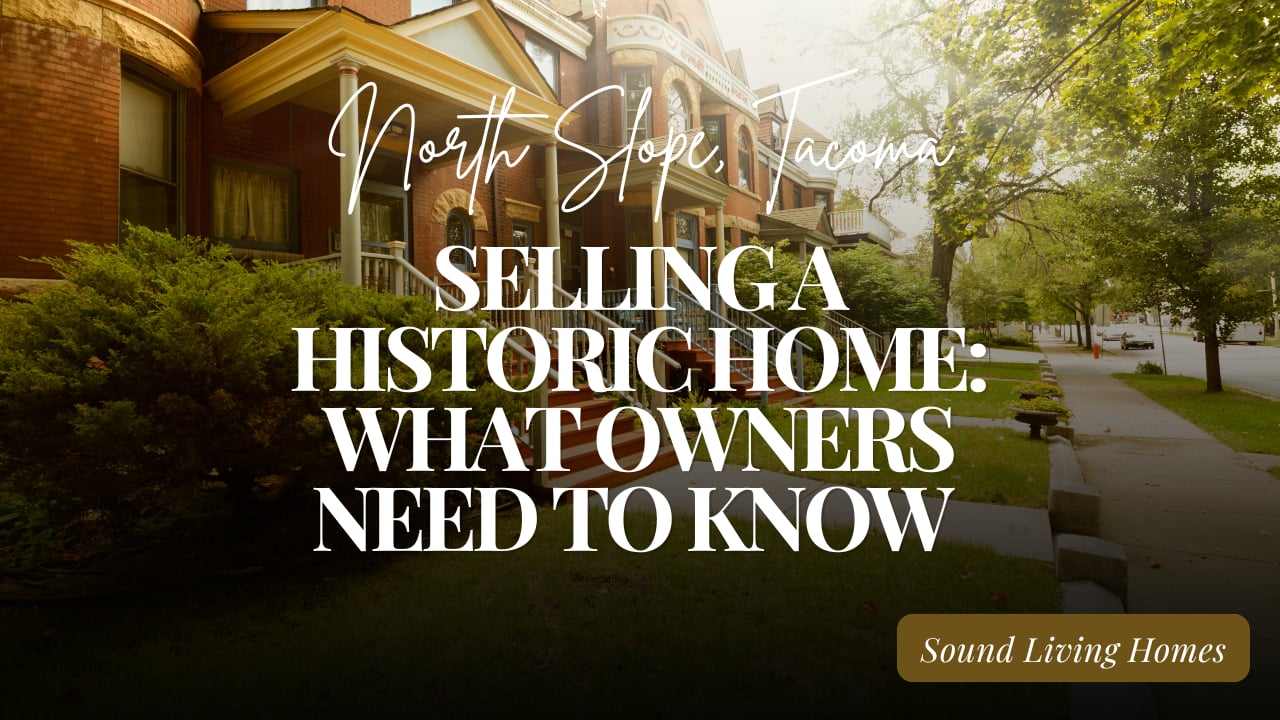
Selling a Historic Home in North Slope Tacoma: What Owners Need to Know
What should you know before selling a historic home in North Slope Tacoma?
Selling a historic home in North Slope Tacoma requires a strategy that accounts for the property's architecture, condition, renovation history, historic designation, and current market competition. To position your home effectively, you need accurate pricing, thoughtful preparation, compelling marketing, and a clear understanding of the information buyers will want before making an offer.
If you own a home in North Slope Tacoma, you already know that the neighborhood has a distinctive identity. Historic residences, established landscaping, mature trees, and architectural details from different periods of Tacoma's development contribute to its character. But selling a home here involves more than highlighting an attractive porch or original hardwood floors. Buyers also want to understand maintenance, previous improvements, parking, usable space, and what they may be able to change after purchasing.
I'm Stephen (Shu) Hsu, a Managing Broker and Realtor® serving Tacoma and communities throughout Western Washington. I grew up in nearby Stadium District and graduated from Stadium High School, so I have a personal connection to this part of North Tacoma that began long before my real estate career. I appreciate what makes these historic neighborhoods distinctive, and I believe sellers benefit from marketing that combines that local context with practical property information. In this guide, I'll walk you through how to prepare, price, market, and sell a historic home in North Slope Tacoma.
What Makes Selling a Home in North Slope Tacoma Different?
North Slope is known for its concentration of older homes, architectural variety, and locally designated historic district. Depending on the property, you may be selling a Queen Anne residence with detailed woodwork, a Craftsman home with original built-ins, or another historic-style property that has undergone renovations over time. These homes can differ substantially in layout, condition, parking, lot configuration, and maintenance history. That variation makes a property-specific selling strategy particularly important.
Unlike neighborhoods where many homes share similar floor plans and construction dates, North Slope can require a more detailed approach to evaluating comparable sales. A nearby property may have different architectural features, renovations, or major systems that influence how buyers assess it. The goal is to explain your home's individual value without assuming that its age or historic character automatically justifies a particular price. Effective marketing connects distinctive features with accurate information about the property.
How Do You Price a Historic Home in North Slope Tacoma?
Pricing a North Slope home begins with current market evidence and a careful comparison of relevant properties. Recent sales, active listings, pending transactions where information is available, and broader market conditions can provide context. However, proximity alone does not make another home an appropriate comparable. Architectural style, square footage, condition, renovations, parking, lot characteristics, and location may all affect how a buyer evaluates your property.
For example, a home with documented major system updates may appeal differently from one that retains more original components but needs substantial improvements. Similarly, finished space, basement configuration, garage access, and the usability of outdoor areas can influence comparisons. A thoughtful pricing analysis considers these differences rather than treating every historic home in the neighborhood as interchangeable. It also recognizes that a seller's renovation expenses do not necessarily translate dollar for dollar into market value.
Why Automated Home Values May Miss Important Details
Automated estimates can provide a starting point, but they may not capture the full range of differences among North Slope properties. Historic architectural details, specialized renovations, unusual layouts, and the condition of major systems are not always represented accurately in automated data. A model may also struggle to distinguish between finished and unfinished areas or between properties with substantially different maintenance histories. These limitations matter when homes are less uniform.
If you're thinking about selling, I recommend a current, property-specific market analysis rather than relying exclusively on an online estimate. That analysis should account for the home's documented features, its condition, and the properties buyers are likely to consider as alternatives. It should also support a pricing strategy that fits your timing and goals. The right list price is one that can be explained using credible evidence, not simply an ambitious number.
Understand Your Home's Historic Designation Before Listing
One of the most important considerations for North Slope sellers is determining whether the property is located within Tacoma's North Slope Historic Special Review District. This locally designated historic district has established boundaries, and certain exterior alterations, additions, demolition, and other projects may be subject to historic preservation review. A property described as being in North Slope is not automatically within the official district. The specific address and applicable city records determine its status.
Historic designation can be relevant to buyers who are considering future improvements. Some may appreciate the preservation framework, while others may have questions about replacing windows, modifying a porch, changing exterior materials, or building an addition. Sellers should avoid promising that a particular project will be approved or suggesting that historic designation prohibits every type of work. The more useful approach is to provide accurate information and direct property-specific questions to the City of Tacoma's historic preservation resources.
Local Historic Designation Versus National Register Status
Local historic designation and National Register recognition are not identical. A National Register listing generally does not impose the same local design-review requirements on privately owned properties, while Tacoma's local historic preservation regulations may affect certain projects within a designated district. This distinction is important when describing a home and answering buyer questions. Incorrectly presenting one designation as the other can create confusion about future renovation possibilities.
Before listing, verify what applies to your property and review any available documentation related to previous exterior improvements. If your home has undergone work requiring historic preservation review, organize the relevant records where available. You do not need to become an expert in every preservation regulation, but accurate information can help buyers investigate the property responsibly. Clear communication is preferable to making broad claims about what owners can or cannot change.
Which Improvements Should You Make Before Selling?
Preparing a historic home for sale is not necessarily about completing a major renovation. In many cases, the more useful starting point is identifying maintenance issues, addressing obvious defects where practical, and improving the home's presentation. Cleaning, landscaping, minor repairs, lighting, and thoughtful staging can help buyers understand the property without requiring extensive changes. The appropriate preparation depends on the home's condition, your budget, and the likely impact of each improvement.
For older homes, it is particularly important to distinguish between cosmetic presentation and significant system concerns. Fresh paint may improve appearance, but it does not resolve an underlying drainage issue or aging roof. Similarly, an attractive kitchen renovation does not establish the condition of plumbing or electrical components elsewhere in the home. A good preparation plan prioritizes the property's actual needs and avoids spending heavily on projects without a clear reason.
Preserve the Architectural Details That Make Your Home Distinctive
Original architectural features can be an important part of a North Slope home's presentation. Depending on the property, these may include hardwood floors, built-in cabinetry, decorative trim, fireplaces, historic windows, staircases, or covered porches. When these elements are in good condition, thoughtful photography and listing descriptions can help buyers appreciate them. However, sellers should distinguish verified original features from later reproductions or renovations.
You do not need to describe every older detail as rare or irreplaceable. Accurate language is more credible than exaggerated claims, especially when buyers are evaluating maintenance and renovation history. If you have documentation about significant restoration work, consider organizing it before listing. That information can help explain the care and investment involved without making unsupported promises about future value.
Should You Renovate a Historic Home Before Selling?
A major renovation before selling should be evaluated carefully. Depending on the project, costs can include materials, labor, permits, design work, and additional requirements related to historic preservation. Older homes may also reveal unexpected conditions once work begins. Completing a project does not guarantee that the eventual sale price will increase by the amount spent.
Before committing to a significant renovation, consider how the home currently compares with competing listings and what buyers in the relevant price range are likely to expect. Some projects may address an issue that would otherwise complicate the sale, while others may be primarily a matter of personal taste. It may make sense to complete certain repairs and leave optional design choices to the next owner. The decision should be based on the property's condition, current market evidence, your resources, and your selling timeline.
What Maintenance Records Should North Slope Sellers Gather?
Documentation can be especially helpful when selling an older property because buyers often want to understand what has been updated and what may still require attention. If available, organize records for roofing, electrical work, plumbing, sewer repairs, heating systems, drainage improvements, foundation work, and major renovations. Permits, warranties, invoices, maintenance records, and relevant historic preservation approvals may help clarify the home's history. The objective is to provide useful information, not to create an impression that every component is new.
Not every older home will have complete records covering decades of ownership. If documentation is missing, avoid guessing about installation dates, permit status, or the scope of previous work. Clearly distinguish what you know firsthand from information provided by earlier owners or other sources. Buyers can then evaluate the available evidence and determine whether additional investigation is appropriate. Transparency can make the transaction process more manageable for everyone involved.
Inspections, Disclosures, and Buyer Due Diligence
Washington home sellers generally need to consider applicable statutory disclosure obligations, including the seller disclosure statement commonly associated with Form 17, unless a lawful exemption applies. The requirements depend on the transaction and property, so sellers should review their specific obligations rather than assuming every sale follows the same rules. Disclosures should be completed accurately based on the seller's knowledge and the applicable instructions. A disclosure form is not a substitute for a buyer's own investigation.
Historic homes may prompt questions about roofing, sewer lines, foundations, electrical systems, plumbing, drainage, previous water intrusion, and renovations. Some buyers may request inspections or additional information during the transaction, depending on the terms of the purchase agreement. Preparing available records and understanding known conditions before listing can help you respond consistently. The goal is not to guarantee that a buyer will find no issues, but to approach the process with accurate information and realistic expectations.
How Should You Market a Historic North Slope Home?
Marketing a North Slope home should communicate both its architectural character and its practical features. Professional photography can highlight exterior details, natural light, room proportions, landscaping, and the relationship between indoor and outdoor spaces. A clear listing description can explain the home's layout, parking, major updates, and documented improvements without relying on vague superlatives. Floor plans and other appropriate visual materials may help buyers understand how an older layout functions.
The property's location also deserves thoughtful attention. North Slope is primarily residential, but nearby Stadium District, Proctor, Old Town, Wright Park, and waterfront destinations provide context for buyers researching North Tacoma. Marketing should accurately distinguish between amenities located within North Slope and those in neighboring districts. Rather than making broad lifestyle promises, describe verifiable locations and encourage buyers to evaluate routes and distances for themselves.
Use Historic Character Without Overstating the Claims
A compelling historic-home listing does not need exaggerated language. Terms such as "original," "restored," "updated," or "historic" should be used accurately and supported by available information when appropriate. If a home has undergone major renovations, explain the documented scope rather than suggesting that every system has been replaced. If the property has a specific historic designation, verify that status before including it in marketing materials.
Buyers interested in North Slope may appreciate architecture and craftsmanship, but they also need to understand ownership responsibilities. A balanced presentation can highlight attractive features while remaining clear about the home's condition and known improvements. That approach supports informed decisions and helps set realistic expectations for showings and inspections. Credibility is particularly valuable when a property has a long and complex history.
Parking, Garages, Basements, and Lot Features Matter
Older North Slope homes can vary significantly in how they accommodate parking and storage. Some have detached garages, driveways, or other off-street spaces, while others depend more heavily on street parking. Garage dimensions and access may differ from what buyers expect in newer construction. Listing information should accurately describe the spaces available without implying that a garage will accommodate every vehicle.
Basements and other lower-level areas also deserve careful description. Older homes may contain a combination of finished, unfinished, and utility spaces, and not every area should be represented in the same way. Sellers should verify how square footage and room uses are described in listing materials. Similarly, lot features such as retaining walls, mature trees, established gardens, stairs, and slopes may affect how buyers evaluate the property. Clear presentation helps buyers understand both the benefits and responsibilities of the space.
What Selling Costs Should You Plan For?
Selling a home involves more than choosing a list price and accepting an offer. Depending on your transaction, costs may include preparation, repairs, staging, photography, negotiated real estate compensation, title and escrow charges, applicable taxes, prorations, and other closing expenses. The amounts and responsibilities vary, and some are negotiable or dependent on the terms of the agreement. Your mortgage payoff and any other obligations affecting the property also influence the net proceeds you may receive.
Before listing, I recommend preparing an estimated seller net sheet using realistic assumptions. This can help you compare potential sale prices and understand how concessions, repair negotiations, or different closing terms might affect your outcome. If you are planning to purchase another home, the estimated proceeds may also influence your next budget and timing. A clear financial picture can help you evaluate offers based on more than the headline purchase price.
How Do You Evaluate Offers on a Historic Home?
The highest offer is not automatically the strongest offer for your circumstances. Purchase price matters, but financing terms, contingencies, earnest money, closing date, requested concessions, and other contractual details can affect the transaction. A buyer who understands the property's condition and renovation history may approach the process differently from someone who has not yet considered the responsibilities of owning an older home. Sellers should evaluate the complete offer rather than focusing on one number.
Inspection provisions may be particularly relevant for historic properties. Depending on the agreement, buyers may have opportunities to investigate systems, request information, or negotiate after inspections. You should understand what the contract requires, which deadlines apply, and how potential negotiations could affect your timeline and net proceeds. A thoughtful offer review considers both the financial terms and the practical likelihood of completing the transaction under the agreed conditions.
Timing Your North Slope Home Sale and Next Move
The best time to sell depends on your goals, property condition, preparation needs, and current market conditions. Seasonal patterns may influence buyer activity, but they do not guarantee a particular outcome. A well-prepared home with an appropriate price can be more compelling than a property rushed to market simply to meet a preferred calendar date. Your personal timeline also matters, especially if the sale is connected to a purchase, relocation, or other major change.
If you are buying another property, consider how the two transactions may interact. Your current mortgage payoff, estimated net proceeds, financing plans, moving arrangements, and preferred closing dates can influence your options. Some sellers may prefer to sell before purchasing, while others may explore different arrangements based on their circumstances. Planning these details early can help you make decisions with a clearer understanding of the tradeoffs.
How North Slope Compares With Stadium District and Proctor for Sellers
North Slope, Stadium District, and Proctor are geographically connected, but their housing characteristics and buyer comparisons can differ. Stadium includes historic homes, condos, and a recognizable commercial district, while North Slope is particularly associated with historic detached residences and established residential streets. Proctor offers another mix of homes near an established neighborhood business district. These differences matter when identifying comparable properties and explaining location-specific features.
As someone who grew up in Stadium District and graduated from Stadium High School, I have a personal appreciation for how these North Tacoma areas connect. However, local familiarity should complement, not replace, current market evidence and property-specific analysis. A home in North Slope should be evaluated based on its own features and the alternatives buyers are considering. That combination of local context and practical analysis is central to a credible selling strategy.
Frequently Asked Questions About Selling a Historic Home in North Slope Tacoma
Does historic designation affect selling a home in North Slope?
Historic designation may influence buyer questions and future renovation considerations, but it does not automatically prevent a property from being sold. Tacoma's locally designated North Slope Historic Special Review District has rules that may apply to certain exterior projects. The exact requirements depend on the property's status and the proposed work. Verify the designation and provide accurate information rather than making broad assumptions about restrictions.
Should I renovate my North Slope home before selling?
Not necessarily. Some repairs or presentation improvements may be worthwhile, while major renovations can involve substantial costs and uncertain returns. The best approach depends on the property's condition, current competition, your budget, and your timeline. A property-specific preparation plan can help you prioritize work that makes sense for your circumstances.
How do I determine what my North Slope home is worth?
A current market analysis should compare your property with relevant recent sales and available alternatives while accounting for architectural style, condition, size, renovations, parking, and lot characteristics. Broad neighborhood averages and automated estimates may overlook important differences among historic homes. Pricing should also reflect current market conditions and your selling goals. A defensible strategy relies on evidence rather than assumptions about historic character.
What documents should I prepare before listing?
Useful records may include permits, renovation documentation, maintenance invoices, warranties, information about major systems, and relevant historic preservation approvals. You should also review applicable seller disclosure requirements and organize information about known property conditions. Not every older home will have complete historical records, so distinguish verified information from estimates or assumptions. Clear documentation can help buyers evaluate the property.
Will buyers be concerned about older systems?
Some buyers may investigate older electrical, plumbing, roofing, sewer, foundation, heating, or drainage systems, depending on the property's condition. The age of a home alone does not establish whether a system is defective or needs replacement. Available maintenance records and accurate descriptions of completed work can provide useful context. Buyers should evaluate the property through the due diligence available under their purchase agreement.
How long does it take to sell a historic home in North Slope Tacoma?
The timeline depends on current market conditions, price, condition, presentation, buyer demand, and contractual terms. Historic homes can vary considerably, so a single neighborhood-wide estimate may not describe your property's likely experience. Preparation and pricing decisions can also influence how the listing is received. Reviewing current comparable activity provides a better basis for planning than relying on outdated market statistics.
Can I sell a North Slope home that needs repairs?
Yes, a home that needs repairs may still be marketable, but its condition can influence pricing, buyer interest, financing considerations, and negotiations. The appropriate strategy depends on the type and extent of the work needed. Sellers should understand applicable disclosure obligations and accurately represent known conditions. A realistic assessment can help determine whether completing certain repairs or marketing the property in its current condition makes more sense.
Your North Slope Tacoma Home Deserves a Property-Specific Selling Strategy
Selling a historic home in North Slope Tacoma is an opportunity to present a property's distinctive architecture, established setting, and connection to Tacoma's history. However, successful preparation and marketing require more than attractive photographs and a description of original features. Accurate pricing, documentation, condition, historic designation, parking, renovations, and buyer expectations all deserve attention. A strategy built around your actual property is more useful than applying the same approach to every home in the neighborhood.
If you're considering selling, start by understanding your home's current market position and the work, if any, that makes sense before listing. Gather available records, clarify your timing, and review how the property compares with current competition. You do not need to complete every possible improvement or have every detail resolved before beginning the conversation. The first step is understanding your options so you can make decisions that align with your goals.
Explore More North Slope Tacoma Real Estate Guides
If you're researching North Slope Tacoma real estate, I've created a series of neighborhood guides to help you understand the area from several perspectives. These articles explore the neighborhood's housing, historic character, nearby amenities, and the practical considerations involved in buying or owning a home. They can also help you understand the questions prospective buyers may be asking when they consider a property in North Slope.
If you're preparing to sell, my Ultimate Guide to Selling a Home in Western Washington provides a broader explanation of preparation, pricing, marketing, offers, closing costs, and planning your next move. It complements this North Slope guide by covering the overall selling process. Together, these resources can help you understand both the neighborhood-specific considerations and the steps involved in selling a home in Western Washington.
Selling Your North Slope Tacoma Home? Let's Grab Coffee
If you're thinking about selling a home in North Slope Tacoma, I'd be happy to help you evaluate your options. We can review your property's condition, discuss its architectural features and renovation history, examine comparable sales, and talk through preparation, pricing, marketing, and timing. Whether you're ready to list soon or simply want to understand what your home might be worth, a conversation can help you decide what makes sense next. There's no need to have every detail figured out before reaching out.
I'm Stephen (Shu) Hsu, a Managing Broker and Realtor® who grew up in nearby Stadium District and graduated from Stadium High School. I serve Tacoma, Fircrest, University Place, Lakewood, Gig Harbor, Puyallup, Spanaway, Renton, Kent, Steilacoom, Silverdale, and other communities throughout Pierce, King, Kitsap, and Thurston Counties. North Tacoma has been part of my life for a long time, and I'd welcome the opportunity to help you approach your next real estate decision with clarity. If you have questions about selling your North Slope home, let's grab a cup of coffee and talk.
If you'd rather begin by exploring properties, you can start here:

Stephen (Shu) Hsu
Managing Broker, Realtor®
253-948-8900
[email protected]
SoundLivingHomes.com